Showing posts with label Born to Kill. Show all posts

Sunday, May 15, 2022

Four Favorite Noirs: Born to Kill (1947), The Dark Corner (1946), Marlowe (1969), and Too Late for Tears (1949)

To celebrate National Classic Movie Day on May 16, Rick at Classic Film & TV Café is hosting the Four Favorite Noirs Blogathon. What a great idea! My only qualm: How am I going to pick only four!

I managed to whittle my list down, as requested, but it was tough. And I cheated a little by including a neo-noir. I decided to write about four little-known noirs because I think they deserve to be seen at least once. If you want to see them again and again, like I do, so much the better!

◊ Born to Kill (1947), starring Claire Trevor and Lawrence Tierney

Born to Kill is a gritty look at two people who are a match made in hell. Sam Wild (Lawrence Tierney) and Helen Brent (Claire Trevor) are attracted to one another for all the wrong reasons. Both of them are turned on by violence and death, and their story doesn’t end well for either one of them (but you already know that because this is film noir). Born to Kill is a perfect example of a noir that shows you what you shouldn’t be doing if you want to avoid the dreadful consequences of a life of crime—that is, in case you are toying with the idea of a life of crime! Tierney and Trevor are fantastic in their lead roles. And many of the supporting actors, some of the great character actors of film noir—Walter Slezak, Elisha Cook Jr., Esther Howard—are, too.

I watched Born to Kill on DVD, with commentary by noir expert Eddie Muller. Muller’s commentary is packed with information about the film, the director, and the actors. In fact, the commentary includes some recorded material from director Robert Wise, and Muller recounts some of his personal experiences meeting Lawrence Tierney, which adds to the fun. RKO produced Born to Kill as an A picture, a vehicle to make Tierney a leading man and star. But Tierney’s own proclivities toward violence off-screen helped sabotage that plan. If you watch Born to Kill on DVD, I highly recommend Muller’s commentary, too.

◊ The Dark Corner (1946), starring Mark Stevens and Lucille Ball

• Brad Galt: “There goes my last lead. I feel all dead inside. I’m backed up in a dark corner, and I don’t know who’s hitting me.”

The Dark Corner is one of those films I can watch again and again and never tire of it. The witty dialogue is one of the things I like best about the film. The repartee between Kathleen Stuart (Lucille Ball) and Brad Galt (Mark Stevens) is so much fun. And their on-screen chemistry works, too, which is amazing when you consider that Lucille Ball was going through a rough patch in her marriage to Desi Arnaz and that she hated working on this film. Somehow Lucille Ball and her costars make it work, and I found myself rooting for Kathleen and Brad to succeed every step of the way.

Lucille Ball is given top billing, but her costar, Mark Stevens is fourth in the list. Two great noir actors come second and third: Clifton Webb (who plays Hardy Cathcart) and William Bendix (who plays White Suit). Their performances add so much to a great film. Clifton Webb has some dry lines and observations that add an appropriately cynical touch, and he can exude menace when he needs to. William Bendix is the hired thug who knows what he’s doing—until he is outwitted, that is, by . . . well, no spoilers this time because this is a good one.

◊ Marlowe (1969), starring James Garner and Rita Moreno

Forget about Humphrey Bogart! Forget about Dick Powell! Don’t get me wrong: I happen to like both of them as Philip Marlowe, but Marlowe has James Garner. And he gives one of the best portrayals of Philip Marlowe. Yes, he is that Philip Marlowe, Raymond Chandler’s famous detective. Another huge plus is Rita Moreno, who costars as Dolores Gonzáles. Moreno, in addition to having a well-deserved “moment” in 2022, is fantastic in Marlowe. Is Gonzáles really a good friend to Mavis Wald, or is she the femme fatale in this story? She keeps everyone, including Marlowe, guessing.

The film is adapted by Stirling Sillphant from Chandler’s novel The Little Sister. The film takes place in 1969, but the story is updated to fit the times while managing to stay true to the novel. For instance, the film opens with Marlowe driving up to a ramshackle beach hotel called The Infinite Pad. People in hippie-style clothing lounge about on the front stairs and porch. And Marlowe shows up in his suit jacket and tie, trying to find the lost brother of his client, one Orfamay Quest. Philip Marlowe is a throwback to the past, a relic of pulp novels from the 1930s and 1940s, but Silliphant’s screenplay and James Garner’s portrayal make Philip Marlowe relevant still in 1969 and so much fun to watch in 2022.

◊ Too Late for Tears (1949), starring Lizabeth Scott and Dan Duryea
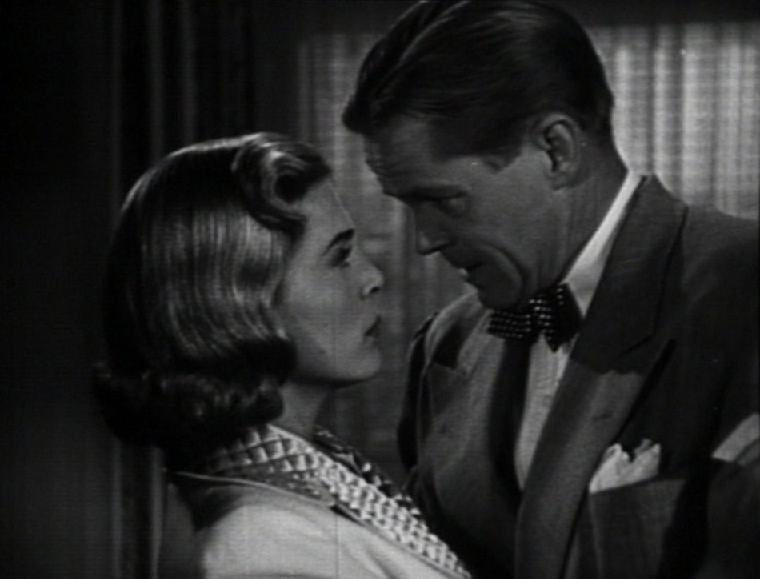
In France, Too Late for Tears is called La tigresse, the perfect name for Lizabeth Scott’s character Jane Palmer. It’s the French translation of Danny Fuller’s (Dan Duryea) nickname for Jane. The minute Jane gets behind the wheel of the car at the start of the film, orders her husband Alan to get in, and drives off with a bag of stolen money thrown into their backseat, you know you are in the noir universe. Jane wants her slice of the American dream, and she doesn’t care who she has to cut out of the picture to get it. Only one man can match her scheme for scheme.

Too Late for Tears holds a special place in my heart because I could swear that I saw it as a child on television. It was Don DeFore who made me wonder. If you are used to seeing him in the television sitcom Hazel or other film comedies, you’re in for a real treat. His performance as Don Blake is certainly memorable. And that’s quite an achievement in a film with two noir greats in Lizabeth Scott and Dan Duryea.

This article about Born to Kill, The Dark Corner, Marlowe, and Too Late for Tears is my entry for the Four Favorite Noirs Blogathon, which is presented by Rick at Classic Film & TV Café to celebrate National Classic Movie Day on May 16. Click here for the complete list of blogathon participants and links to their blogs. The list will be updated throughout the day.

Monday, April 17, 2017

Born to Kill (1947)

May 3, 1947, release date
Directed by Robert Wise
Screenplay by Eve Greene, Richard Macaulay
Based on the novel Deadlier Than the Male by James Gunn
Music by Paul Sawtell
Edited by Les Millbrook
Cinematography by Robert De Grasse

Claire Trevor as Helen Brent
Lawrence Tierney as Sam Wilde
Walter Slezak as Albert Arnett
Phillip Terry as Fred Grover
Audrey Long as Georgia Staples
Elisha Cook, Jr. as Mart Waterman
Isabel Jewell as Laury Palmer
Esther Howard as Mrs. Kraft
Kathryn Card as Grace
Tony Barrett as Danny Jaden
Grandon Rhodes as Inspector Wilson

Distributed by RKO Pictures

Born to Kill is a great film, but it is an unusually dark story about murder and obsession. Most films noir are about these topics exactly; Born to Kill examines the reasoning and obsessive impulses of its main characters more closely, and in more detail, than most films noir. The story is quite unsettling, even for viewers today—and almost seventy years after its release.

(This blog post about Born to Kill contains spoilers.)

Helen Brent is in Reno, Nevada, for a quick divorce. Viewers are dropped into the middle of her story. No explanation is offered about her reasons for seeking a divorce, and the little that viewers learn of Helen’s back story occurs only as the current plot unfolds. While in Reno, she has a chance encounter in a gambling house with Sam Wilde. There seems to be some attraction between them, but Sam has other things on his mind that night. His girlfriend, Laury Palmer, is in the casino with another date in a misguided attempt to make Sam jealous. Her plan is effective, but she never anticipated Sam’s response: He follows her and her date to her house when they leave the casino and kills them both. He is efficient and methodical for someone who didn’t plan very far ahead, and that’s because he has had a lot of practice.

Helen is staying in the rooming house next door to the murder scene. She finds Laury’s dog, who escaped when Sam left Laury’s house. She brings the dog to the back door, enters the house, and discovers the bodies. Helen is calm about her discovery of the murder scene. She leaves the dog and returns to her boarding house. She contemplates calling the police but decides against it. She decides instead to leave Reno as quickly as possible.

Sam leaves Reno too, mostly at his roommate’s urging, that same night. Mart Waterman seems like the voice of reason in their friendship. Here is part of their conversation after Sam’s return following the murders:
• Sam: “The Palmer dame’s dead.”
• Mart: “Why’d you do it, Sam?”
• Sam: “I had to. She caught me with him.”
• Mart: “Him?”
• Sam: “That kid. They were making a monkey out of me. Oh, I wouldn’t have killed her too, I guess, but she walked in and saw the kid lying there.”
• Mart: “I’ve been scared something like this’d happen. The way you go off your head. And it’s been worse lately. Ever since the nervous crack-up last summer. Honest, Sam. You go nuts about nothin’. Nothin’ at all. You gotta watch that. You can’t just go around killing people whenever the notion strikes you. It’s not feasible.”
• Sam: “Why isn’t it?”
• Mart: “All right, Sam. All right, it is.”
Mart knows Sam well and assumes right away that Sam killed Laury—and Sam doesn’t deny it. Their comfort level with each other indicates that they have had similar conversations before. Sam offers his rationale for killing both Danny and Laury: “It’s just that I never let anybody cut in on me on anything.” Viewers are not very far into the film, but they know almost from the start that the world in this film is off-kilter and unpredictable.

Helen Brent and Sam Wilde flee Reno for San Francisco and meet on the train when they leave town. The attraction between them is evident, but Helen neglects to mention her fiancé Fred Grover. When Sam discovers Helen’s engagement in San Francisco, a dangerous game of cat and mouse erupts between Sam and Helen. Helen wants both Sam and Fred; Sam decides to marry Helen’s sister Georgia (Helen and Georgia are foster sisters) and invites Mart Waterman to San Francisco. It’s a game both Sam and Helen enjoy and play to the death.

The following conversation between Helen and Sam occurs rather late in the film and explains much of what the two see in each other:
• Helen: “Fred is peace and security.”
• Sam: “It’s his money then.”
• Helen: “Yes, partly. All my life I’ve lived on other people’s money. Now I want some of my own. But there’s another kind of security that Fred can give me. Without him, I’m afraid of the things I’ll do. Afraid of what I might become. Fred is goodness and safety.”
• Sam: “And what am I?”
• Helen: “You? You’re strength, excitement, and depravity. There’s a kind of corruptness inside of you, Sam.”
• Sam: “That would drive most women off if they understood like you do.”
• Helen: “Yes.”
• Sam: “But not you. You have guts. Georgia [Helen’s sister] told me how you found those two in Reno. You had guts then. You didn’t yell or faint.”
• Helen: “No.”
• Sam: “And it wasn’t only finding them dead. It was the way they were dead. The kid jammed in the doorway, the Palmer dame lying there under the sink.”
• Helen: ”Blood on her hair.”
• Sam: “Blood all over the place, and you didn’t yell.”
• Helen: “No, I didn’t.”
Sam and Helen see each other clearly. And Sam is right: Most women—most people—would be repulsed by these character traits and the events that Helen has witnessed. But in the world of film noir, these characters and events are the norm. And Born to Kill portrays its noir world well.

I very much enjoyed the DVD commentary provided by Eddie Muller. He describes the noir moment in Born to Kill, the moment when Helen Brent makes a conscious decision that leads her further into the dark side. This noir moment occurs when Helen decides not to call the police about the murder scene she has found in Laury Palmer’s house. Muller states, “If you are the kind of person who would ask yourself, ‘Why didn’t Helen just call the police?’ chances are that you may not get film noir.” And that may very well be true. But film noir also shows viewers what not to do if they want to sleep well at night. And Born to Kill does that very well, too.